Selecciona tu idioma
Some bathrooms are designed; the Moroccan bathroom is composed. Walls of small glazed squares that catch the light differently piece by piece, colours borrowed from souks and courtyards, and a warmth that turns the most functional room in the house into a small riad. It is one of the few decorative styles that manages to feel exotic and familiar at the same time, which explains why it never leaves the mood boards for long.
In this guide we cover what gives Moroccan bathroom tiles their character, the colours leading the trend, where to use them, the floor that completes the picture, and the porcelain collections that bring the look home without the fragility of the handmade originals.
The secret is imperfection. Traditional zellige has been made the same way for a thousand years: clay from Fez, cut by hand, glazed by hand, fired in ovens that never treat two pieces identically. No square shares exactly the same tone, thickness or shine as its neighbour, so a tiled wall behaves less like a surface and more like water, shimmering differently every hour of the day. That constant, quiet movement is what makes a Moroccan bathroom impossible to reproduce with a plain painted wall.
Porcelain and ceramic versions keep that irregular glaze and rich colour while adding what the originals never had: consistent calibres that install easily, surfaces that ignore water and cleaning products, and prices that do not depend on a workshop in Fez. The Seville and Souk collections are the catalogue’s two doors into that world, with Altea and the soft clays of Mud playing the quieter variations.
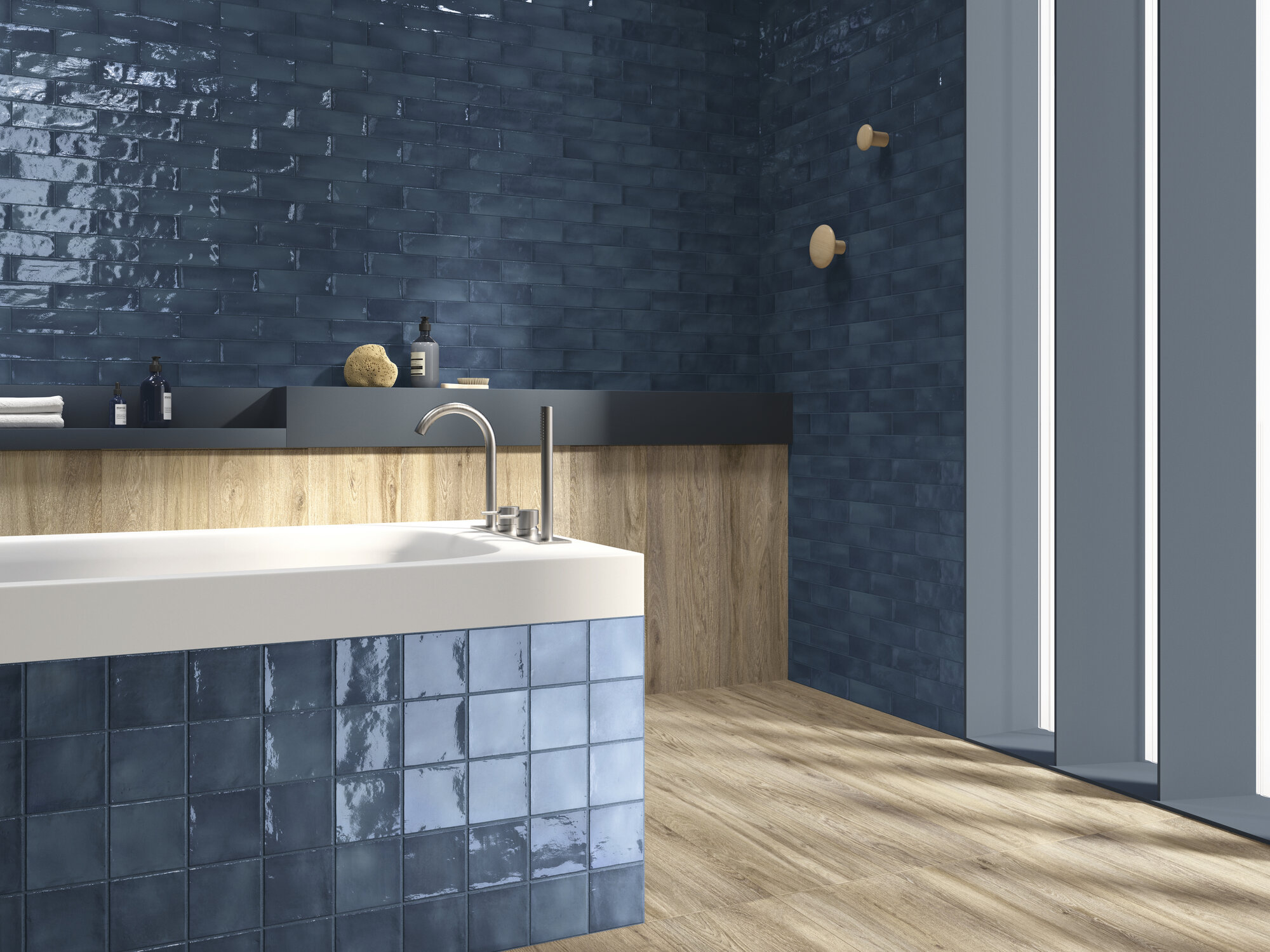
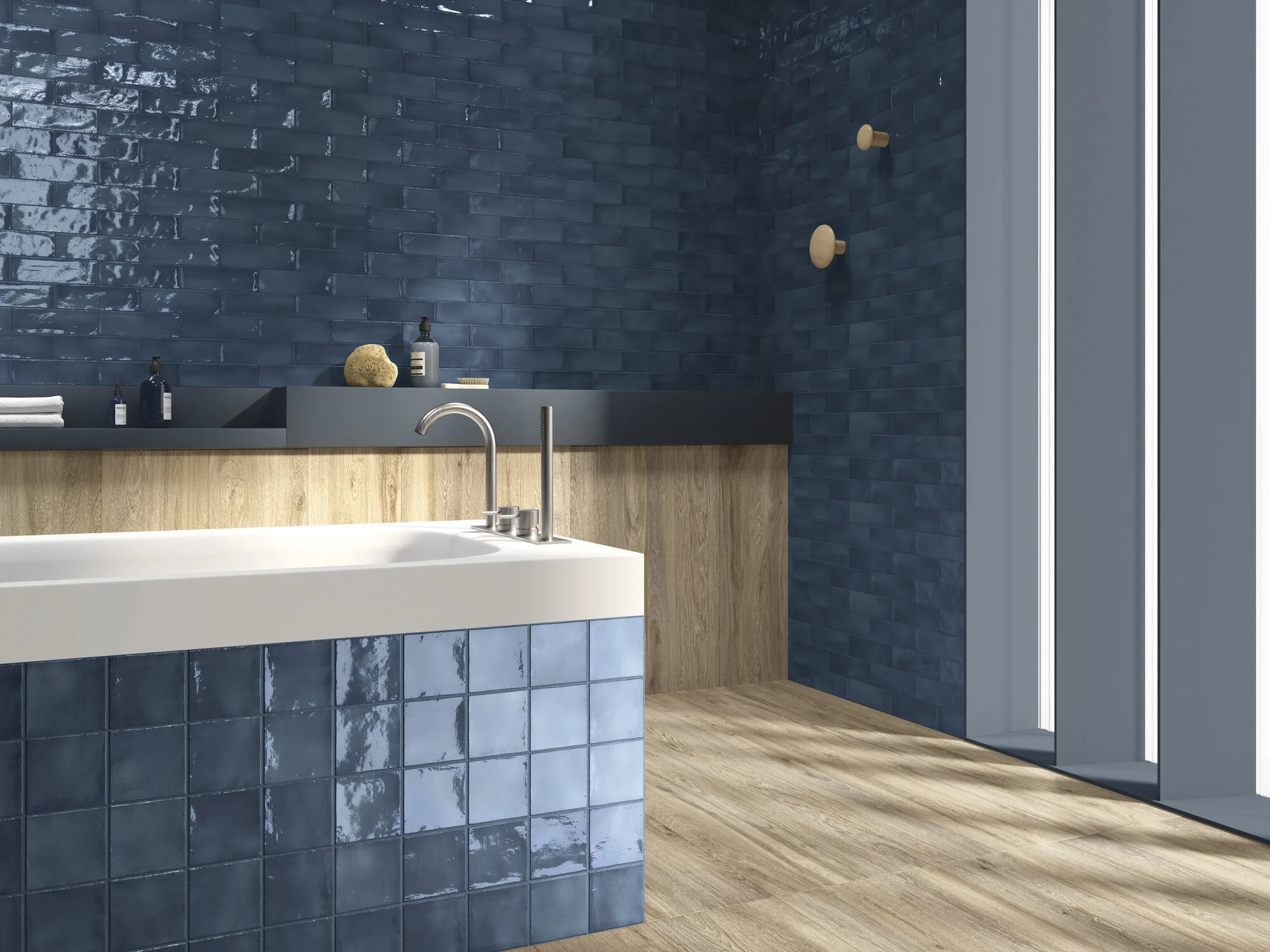
If one colour defines the Moroccan bathroom it is blue, and the country offers a whole gradient of references: the powdery washes of Chefchaouen, the deep majorelle of Marrakech gardens, the sea blues of Essaouira. An indigo wall of glazed squares over a white base is the fastest route to the look, and tiling the bathtub front in the same piece, a very Moroccan gesture, ties the room together into one object.
In the catalogue, Seville Indigo and Glacier cover the deep and pale ends of that gradient, and Souk adds Blue and Turquesa in its handcrafted 13×13 format. If the full blue bath feels like too much commitment, a single blue shower column framed by white keeps the reference and lowers the volume.
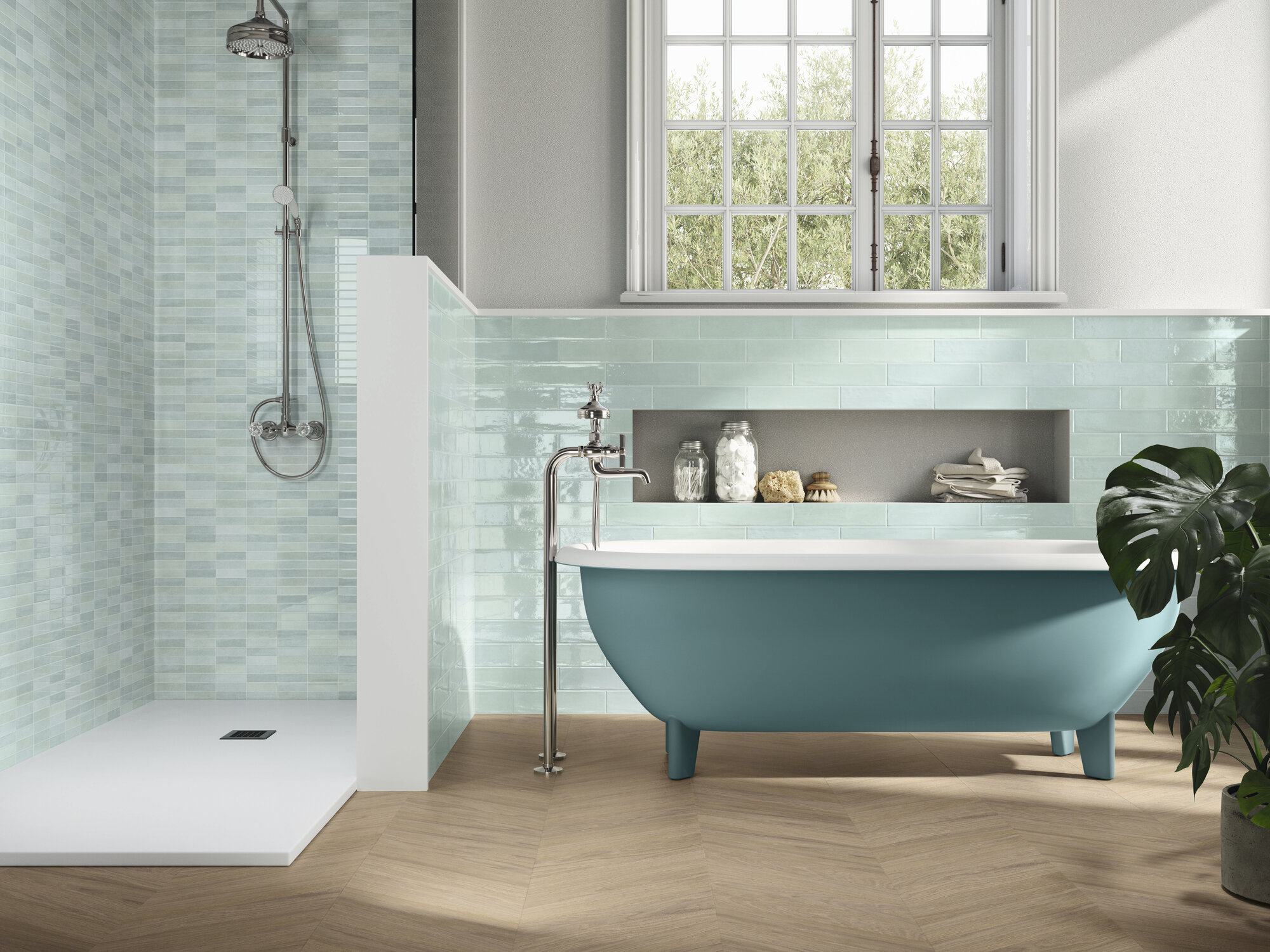
The other Moroccan signature is warmth: honey, ocre, sand and mint greens that soften the light instead of bouncing it. These are the tones of courtyards and hammams rather than postcards, and they have a practical virtue: they flatter skin tones and warm artificial light, something a bathroom mirror appreciates every morning. A green or aqua scheme reads spa-like and fresh, especially with wood and plants around it:
Seville Honey brings the golden version, Souk Ocre the earthy one, and Mud runs the pastel range from rose to light green. The rule of the riad: pick one colour and let it flood the wall; Moroccan style is generous, never timid. Two colours can coexist, but give each its own plane, one for the shower, one for the vanity, rather than mixing them tile by tile.
In Morocco the glazed wall almost never meets a glazed floor. Underfoot, the tradition is baked clay: bejmat bricks and terracotta in warm earth tones that ground all that colour and shine. That pairing, glossy colour above and matt clay below, is the easiest formula for a Moroccan bathroom that feels authentic rather than themed.
The Argillae collection brings that clay warmth in porcelain with the grip a wet floor needs, and our guide to terracotta tiles covers the whole family of earth-toned floors in depth.
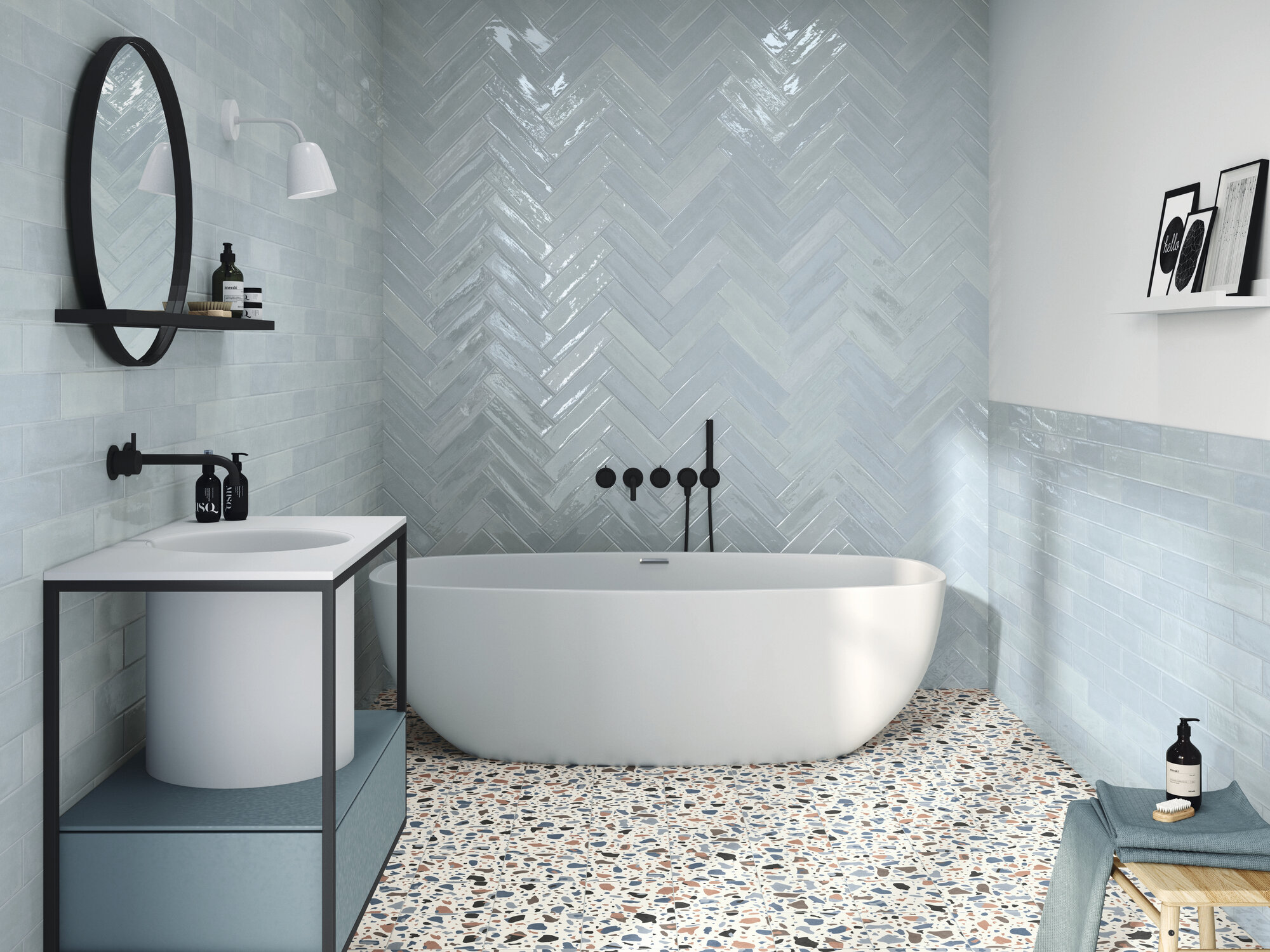
The stacked square grid is the traditional reading, but the same pieces allow softer geometries. Herringbone adds movement without leaving the artisan register, vertical stacking stretches low ceilings, and mixing two neighbouring tones in one wall recreates the gentle colour shifts of real zellige:
Whichever layout you choose, keep the grout warm and discreet: a sand or light grey joint lets the glaze do the talking, while a stark white one turns the wall into graph paper. For the full square-format playbook, formats, grids and checkerboards included, our guide to square tiles translates directly to the bathroom.
Moroccan style is a whole cast, not a single actor. Once the tiles set the stage, a few supporting choices finish the scene:
Handmade zellige is porous and demands sealing; its ceramic and porcelain heirs are not. The glazed surface wipes clean, resists cosmetics and cleaning products, and keeps its colour for decades, which is why the style has become viable in family bathrooms and rentals, not just design projects.
Very well: the small format adds depth and detail rather than clutter, and pale glazed tones bounce light around compact rooms. Our guide to small bathroom tiles shows how to plan it wall by wall.
Zellige is the traditional hand-cut glazed tile of Morocco; “Moroccan tiles” is the wider family that also includes patterned cement pieces and terracotta floors. In practice the bathroom look is built mostly on the zellige-style glazed square, with terracotta playing its natural partner underfoot.
Moroccan bathroom tiles prove that character is a matter of surface, not square metres. Flood a wall with Seville, add the artisan squares of Souk or the soft clays of Mud, ground it with a terracotta floor, warm it with brass and wood, and let the light do the rest.


 Return