Selecciona tu idioma
Few materials calm a bathroom like stone. The soft pits of travertine, the quiet grain of limestone, the drama of quartzite: natural stone bathroom tiles carry millions of years in every piece, and interiors keep coming back to them for exactly that reason.
In this guide we cover the stones leading bathroom design, what each one brings to the room, what natural stone honestly demands in a wet space, and how porcelain delivers the same beauty without the upkeep.
Trends in bathrooms rotate quickly, but stone sits outside the cycle. Its appeal is sensory rather than stylistic: irregular texture, mineral colour that changes with the light, and a feeling of permanence no printed pattern can fake. A stone bathroom reads as spa, retreat and heritage at once.
That is why the look survives every wave of minimalism and maximalism alike: the materials underneath the trend never change, only the way we frame them.
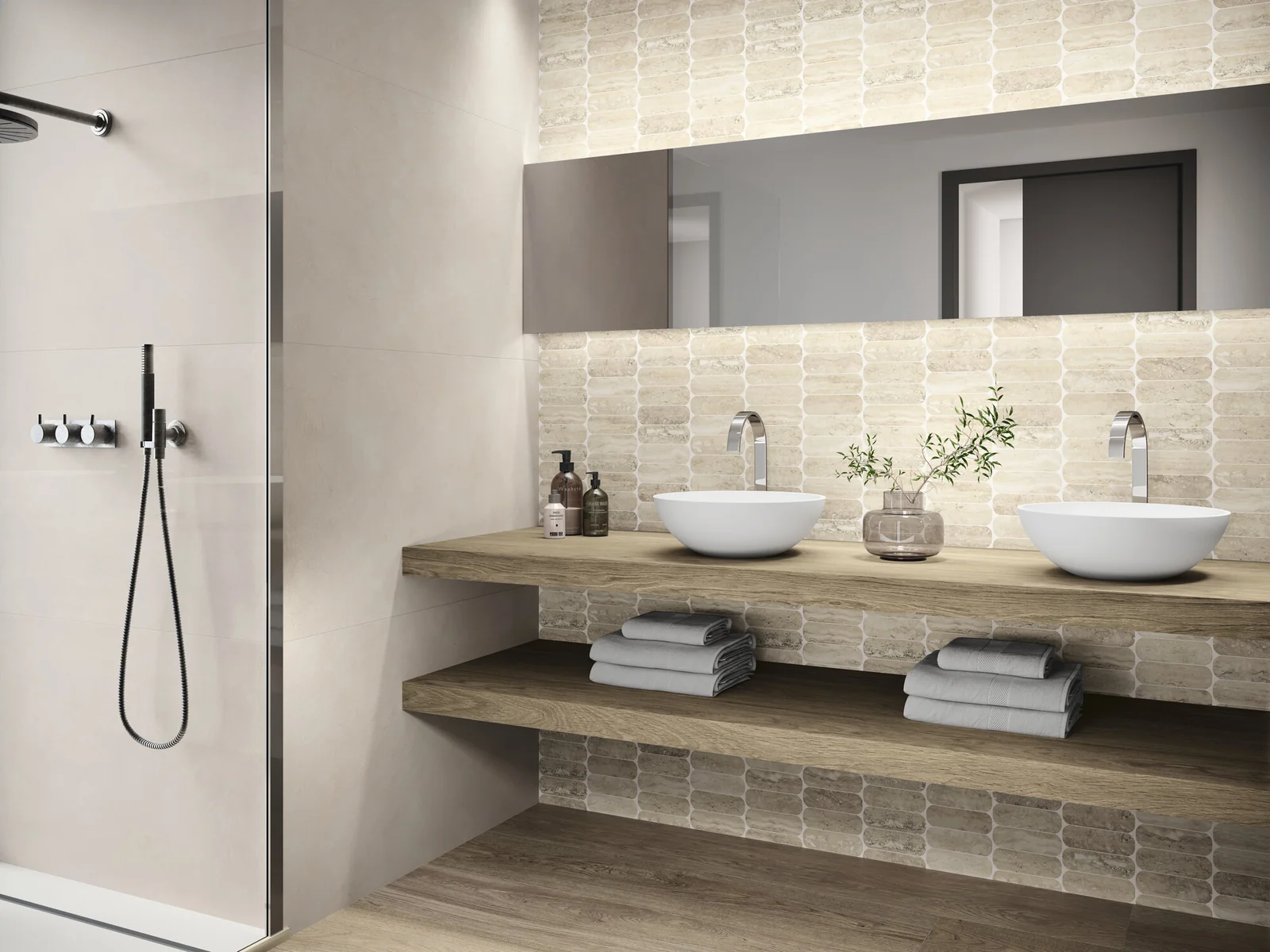
The stone of Roman baths is having its biggest moment in decades. Its sandy bands and soft pores wrap a bathroom in warmth, and its palette of creams and sands pairs naturally with wood and brass. The Travento collection captures that banding in porcelain, pores included, without the filling and sealing the real stone requires.
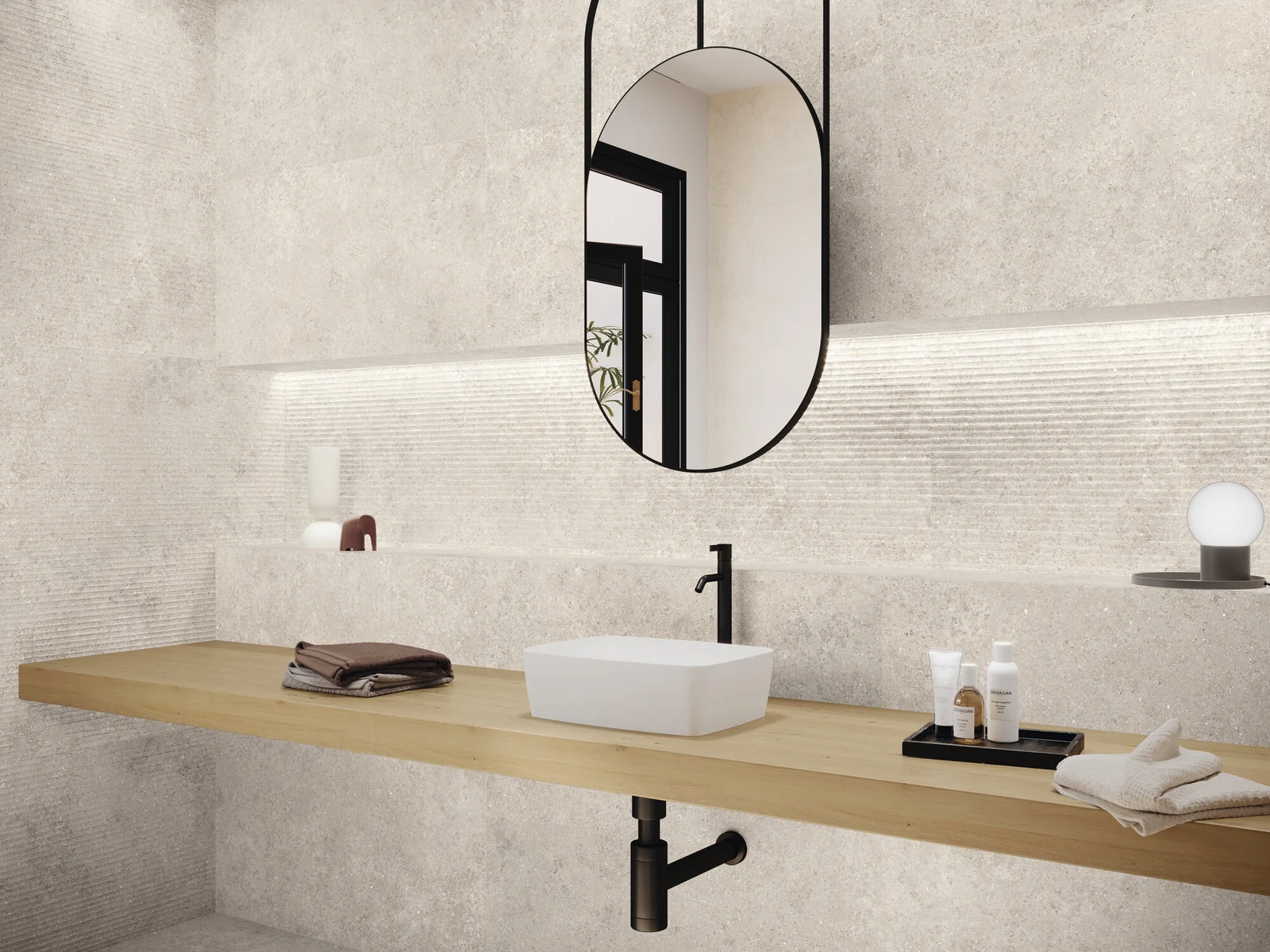
Limestone is the introvert of the family: fine grain, powdery matt surface, colours that go from chalk to grey. It is the stone behind the serene, almost monastic bathrooms filling design magazines. In the catalogue it speaks through Limestone and the softer, Japanese-inflected Kyoto.
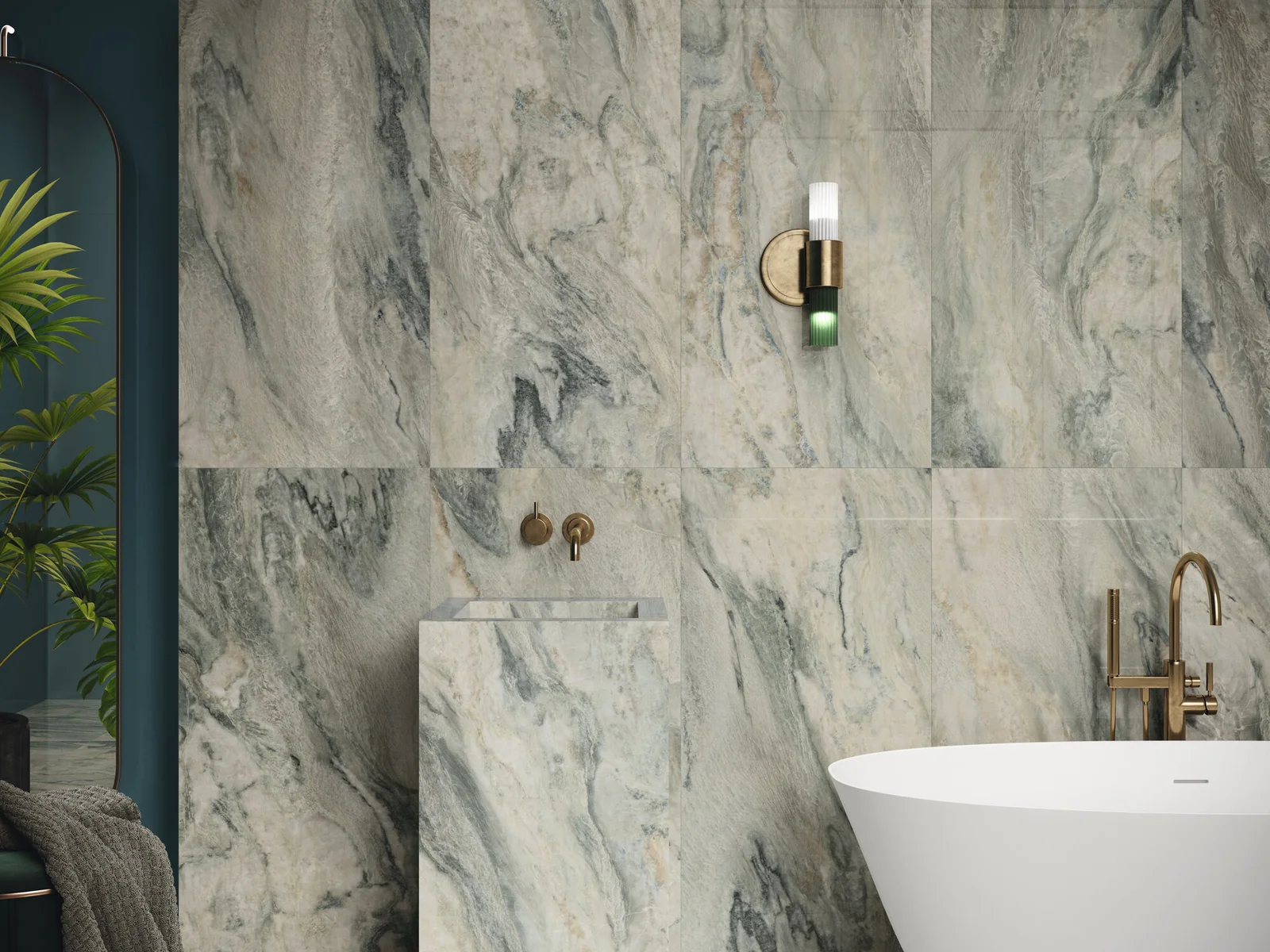
When the bathroom wants one unforgettable wall, quartzite is the stone that delivers it: sweeping mineral veining somewhere between marble and rock face. Gaya Quartzite plays the dramatic version, and the stone-like calm of Taj Mahal, inspired by the famous Indian quartzite, the discreet one.
Slate brings the dark, layered texture of mountain stone, reproduced in the Kasta collection, and marble remains the luxury end of the mineral world; we cover its colours and combinations in our guide to marble tiles.
None of this makes natural stone a bad choice; it makes it a demanding one. The question is whether the bathroom, the busiest wet room in the house, is where you want that demand.
Porcelain stoneware answers with the same visuals and none of the conditions: zero porosity, no sealing ever, colours that ignore cosmetics and cleaning products, and grip finishes for the shower zone. Large formats such as 60×120 and 120×120 let the veining run like a quarry slab, a trick we explain in our guide to large format tiles in the bathroom.
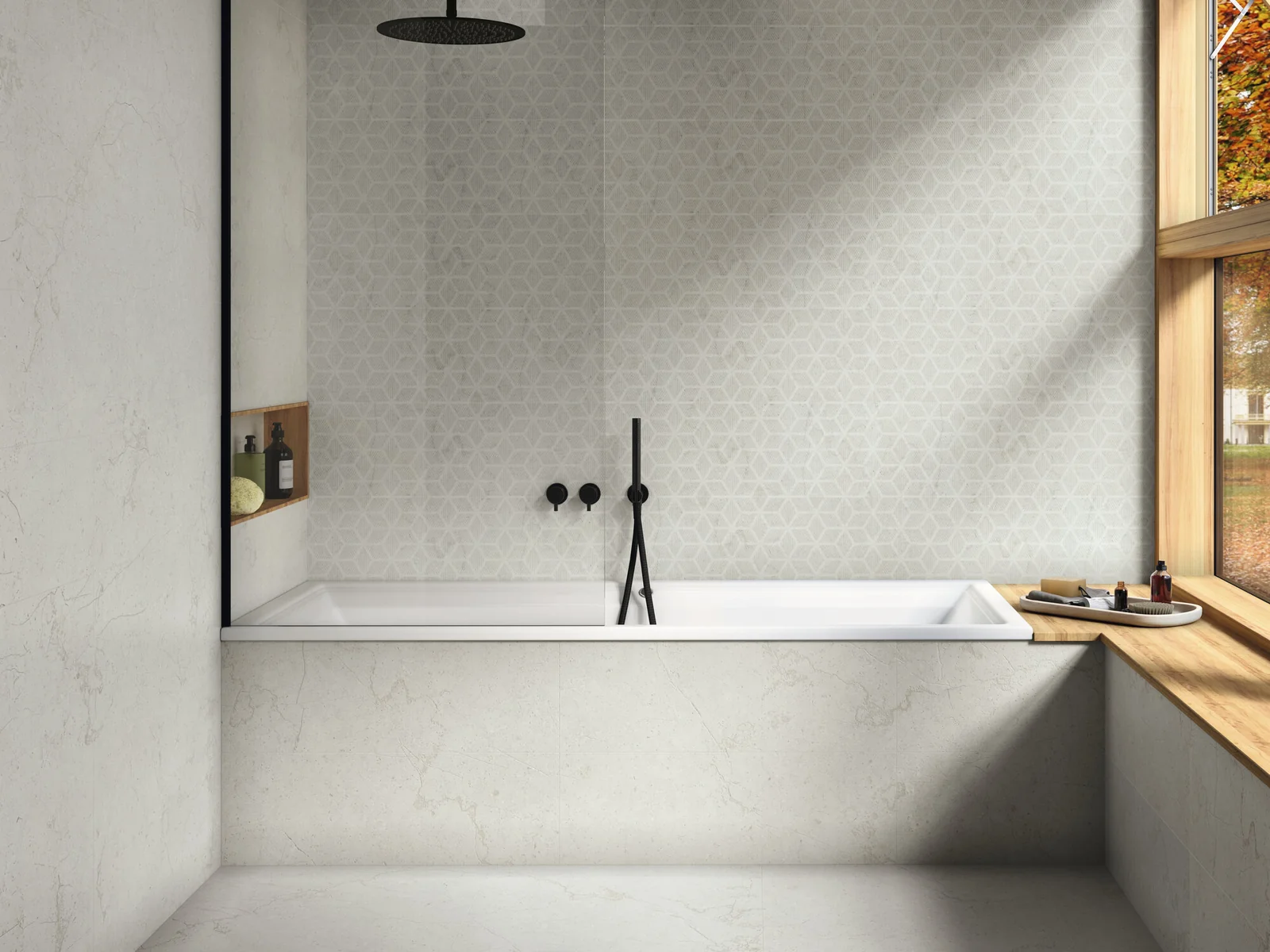
It also unlocks combinations real stone cannot offer, like matching floor-and-wall continuity or mosaic accents cut from the same series:
It can be, with sealing, gentle cleaners and a honed rather than polished finish. If that routine sounds unappealing, stone effect porcelain gives the identical surface with standard tile maintenance.
Pale limestone and travertine tones in large formats, with tone-on-tone grout and the same tile on floor and walls. Continuous mineral colour blurs the room’s edges.
Visually, current printing makes it close to impossible; graphics vary piece by piece like quarry cuts. The differences appear in use: porcelain does not stain, etch or ask for sealing, which is usually how owners remember which one they chose.
Natural stone bathroom tiles offer what no other material can: time made visible. Choose your mineral in Travento, Limestone or Gaya Quartzite, let porcelain handle the physics, and keep the geology purely for pleasure.


 Return