Selecciona tu idioma
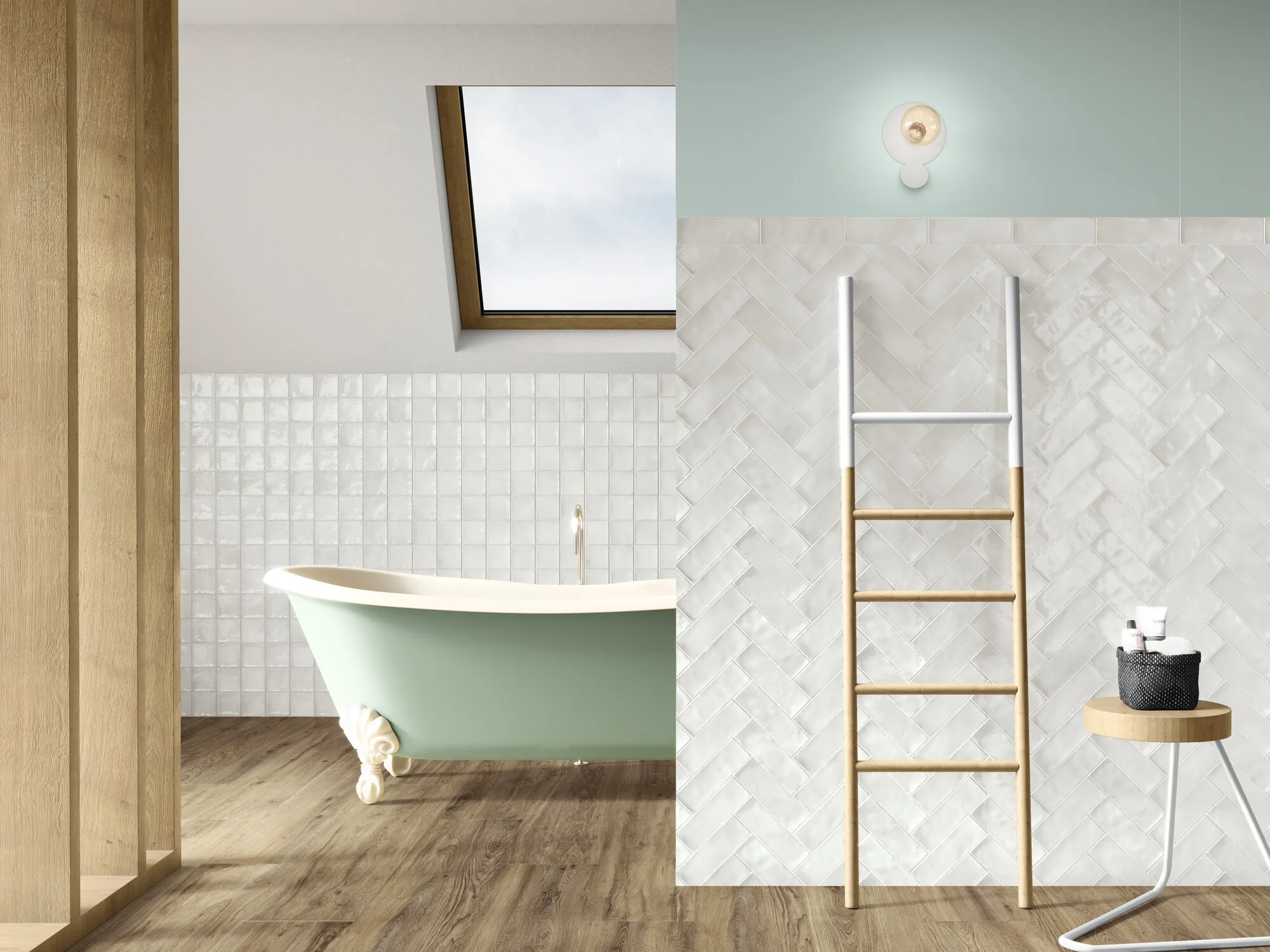
White tiles are supposed to be the safe choice, the one nobody notices. White zellige breaks that rule. Each glazed square carries its own slight variations of tone and surface, so a white zellige wall is never flat: it ripples, catches window light in the morning and lamp light at night, and gives the simplest colour in the palette a life of its own.
In this guide we cover what separates white zellige tile from plain white tile, the warm and cool whites to choose from, where the look works hardest, from kitchen backsplashes to fireplaces, and the formats and grout choices that finish it properly.
The difference is in the surface. A standard white wall tile is engineered to be identical: same tone, same flatness, same reflection, piece after piece. Zellige-style tiles are built on the opposite idea, inherited from the hand-cut glazed squares of Morocco: gentle undulations, edges that are not quite straight, and a glaze that pools slightly differently on every piece.
Laid together, those small differences add up to a wall that behaves like fabric rather than plastic. White stops being an absence of colour and becomes a material. And because the effect comes from texture rather than pattern, it works in farmhouse kitchens, minimalist bathrooms and everything between, which is exactly why designers keep specifying it.
“White” zellige is really a small family of whites, and the choice sets the mood of the room:
The full range lives in the Seville collection, with Souk Bone and Pearl offering the 13×13 artisan reading of the same idea.
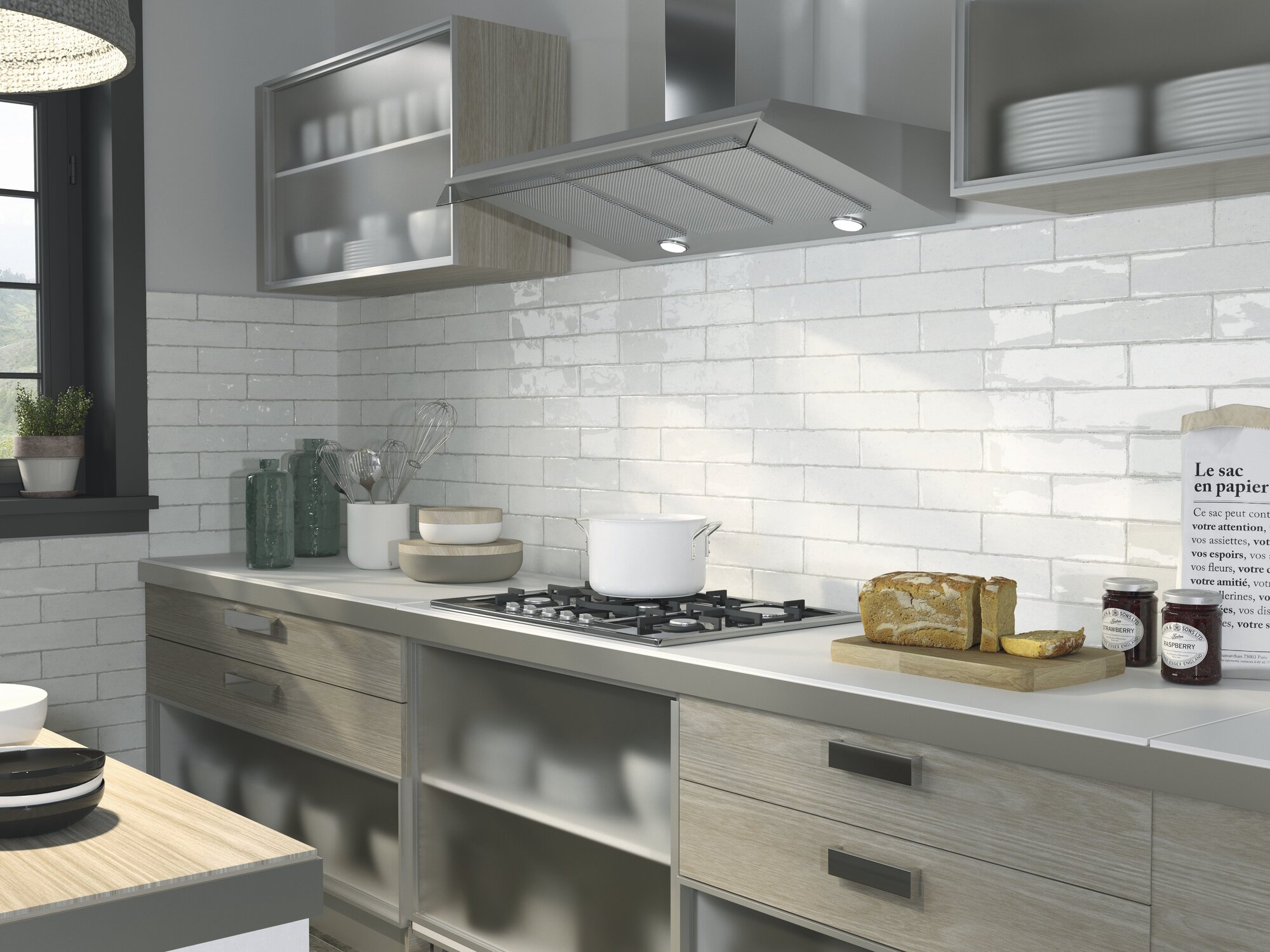
If the last decade belonged to the flat white subway tile, this one belongs to its handcrafted heir. A white zellige backsplash delivers the same brightness and easy matching, but with a surface that makes the kitchen feel designed rather than fitted.
It flatters every cabinet colour, hides water marks better than a flat gloss, and photographs beautifully, which has not hurt its popularity.
It is also the safest way into the artisan look for a white and wood kitchen, a pairing we explore in our guide to white and wood kitchens; the glazed texture supplies the character that the calm cabinetry deliberately renounces.
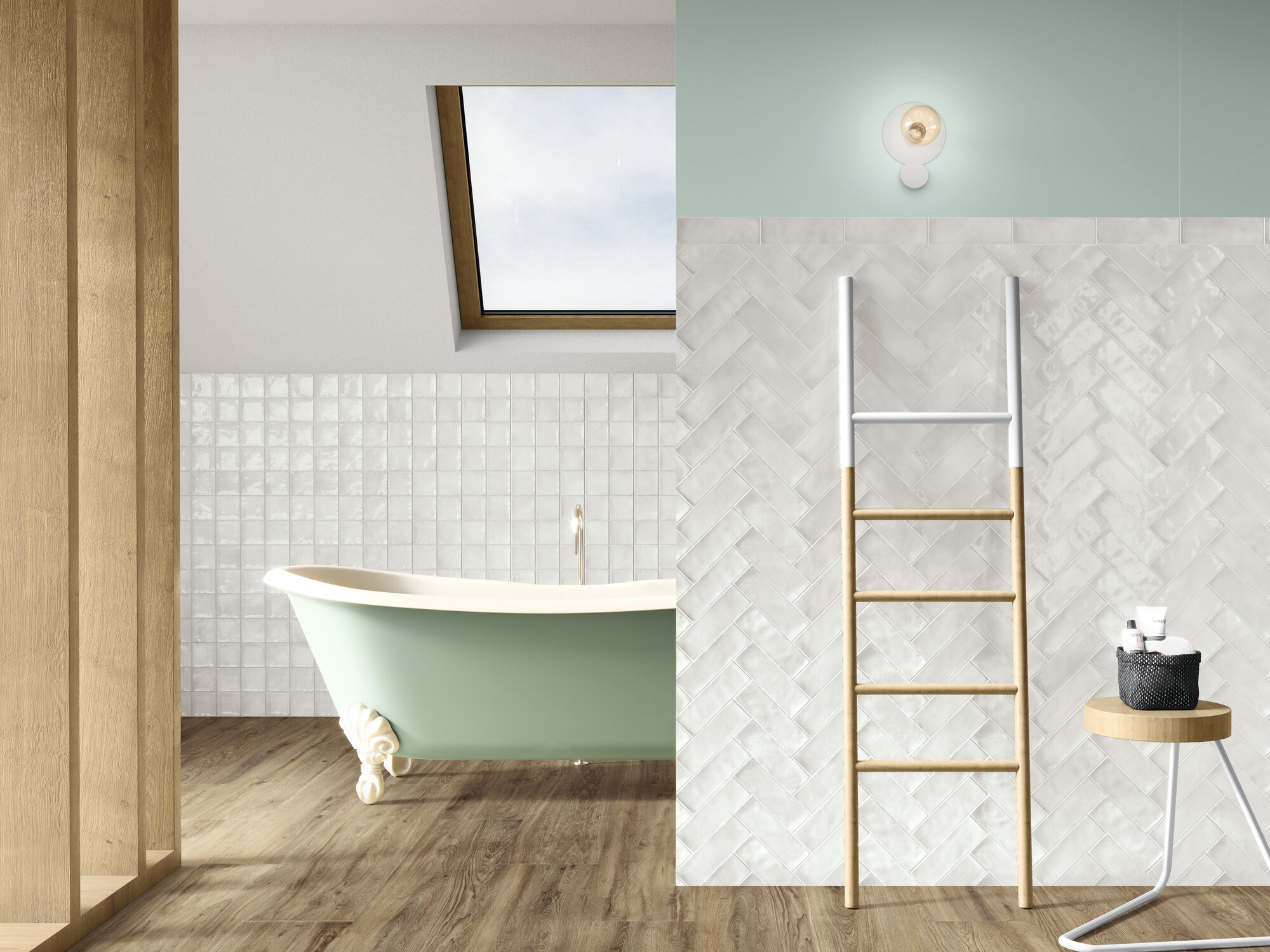
In the bathroom, white zellige solves an old dilemma: how to make an all-white scheme feel warm instead of clinical. The undulating glaze keeps the walls alive, and the style pairs naturally with both painted vintage pieces and modern black taps:
Half-height wainscots, full shower walls or a backdrop for a freestanding tub all work; in compact rooms, the small glazed format adds depth without visual noise, a trick covered in our guide to small bathroom tiles.
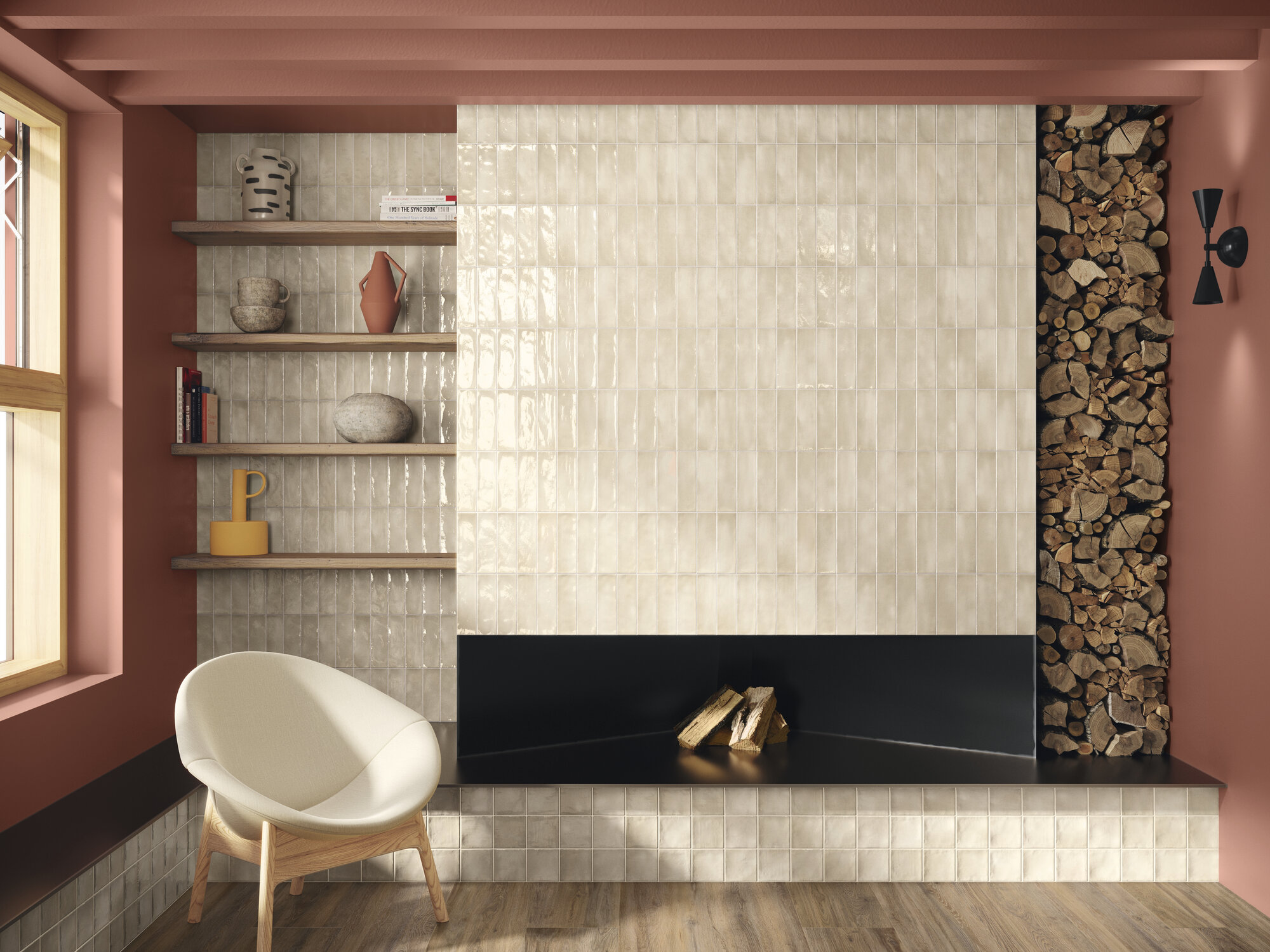
Because white zellige reads as material rather than decoration, it has quietly escaped the wet rooms. A fireplace surround is the star application, the glazed white against flame and firewood is pure alchemy, and entryway wainscots, bar fronts and bedroom headboard walls follow the same logic:
The classic zellige format is the small square, 10×10 in Seville, 13×13 in Souk, laid in a straight stacked grid. The 6,5×20 brick of Seville and the elongated 7,5×30 of Altea open the door to brick bond, vertical stacking and herringbone, which is how the bathroom above earns its movement.
Grout decides the final character: tone-on-tone (white or bone joints) melts the wall into one shimmering surface, the most authentic zellige reading, while a light grey joint draws the grid and leans modern. Avoid dark contrast grout here; it turns craft into graph paper. And keep the glossy pieces on walls, with matt grip finishes for any floor duty.
The material predates every trend cycle by about a thousand years; what is recent is only its return to fashion. White plus handcrafted texture is one of the safest long-term bets in interiors, closer to a classic than a fad.
Match it: white or warm off-white joints let the glaze variations do the work. If you want the grid visible, stop at light grey. Dark grout belongs to metro and industrial styles, not to zellige.
The opposite: the glassy surface wipes clean with standard cleaners, and the tonal variation actually hides splashes and water marks better than a uniform flat white. That is why the look thrives in real kitchens, not just showrooms.
White zellige tiles turn the most neutral choice in the catalogue into the most tactile one. Start with the whites of Seville, stretch the format with Altea or go full artisan with Souk, keep the grout quiet, and let the light finish the design every day of the year.


 Return