Selecciona tu idioma
White and grey are the two voices marble speaks most fluently. White marble tiles bring light and ceremony; grey marble tiles bring calm and depth; and between the two sits a whole family of veined surfaces that has dressed palaces for centuries and dresses modern homes today.
In this guide we cover the whites worth knowing (Carrara included), the greys that never tire, where each one works best, and how to combine them.
No surface bounces light quite like white marble. On walls it opens the room; on floors it sets a formal, serene tone that flatters both classic and contemporary furniture.
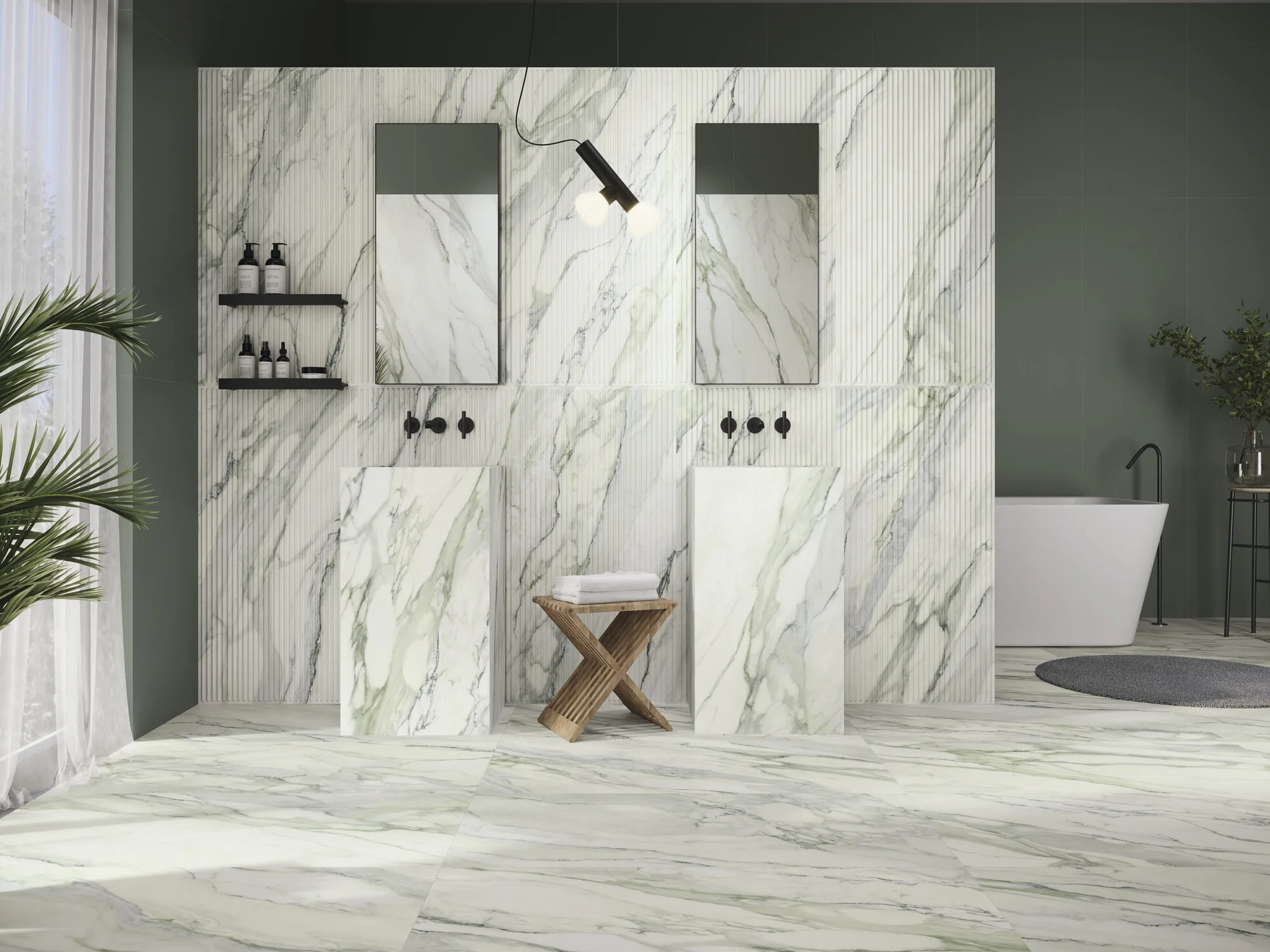
Within the APE Grupo catalogue, two collections read the white in different accents. Arabescato is the stately one, cream-white with grey threads woven through it. Michelangelo is the adventurous one: a snow-white base crossed by dark, blueish veining, the porcelain answer to the blue and white marble that designers are asking for right now.
Most searches for white marble start with one word: Carrara. The famous Italian quarries actually produce several personalities, and telling them apart helps you brief any project:
In porcelain, all of them gain what the quarry cannot give: stain resistance, no sealing, and formats up to large slabs at a fraction of the cost of italian carrara marble tiles.
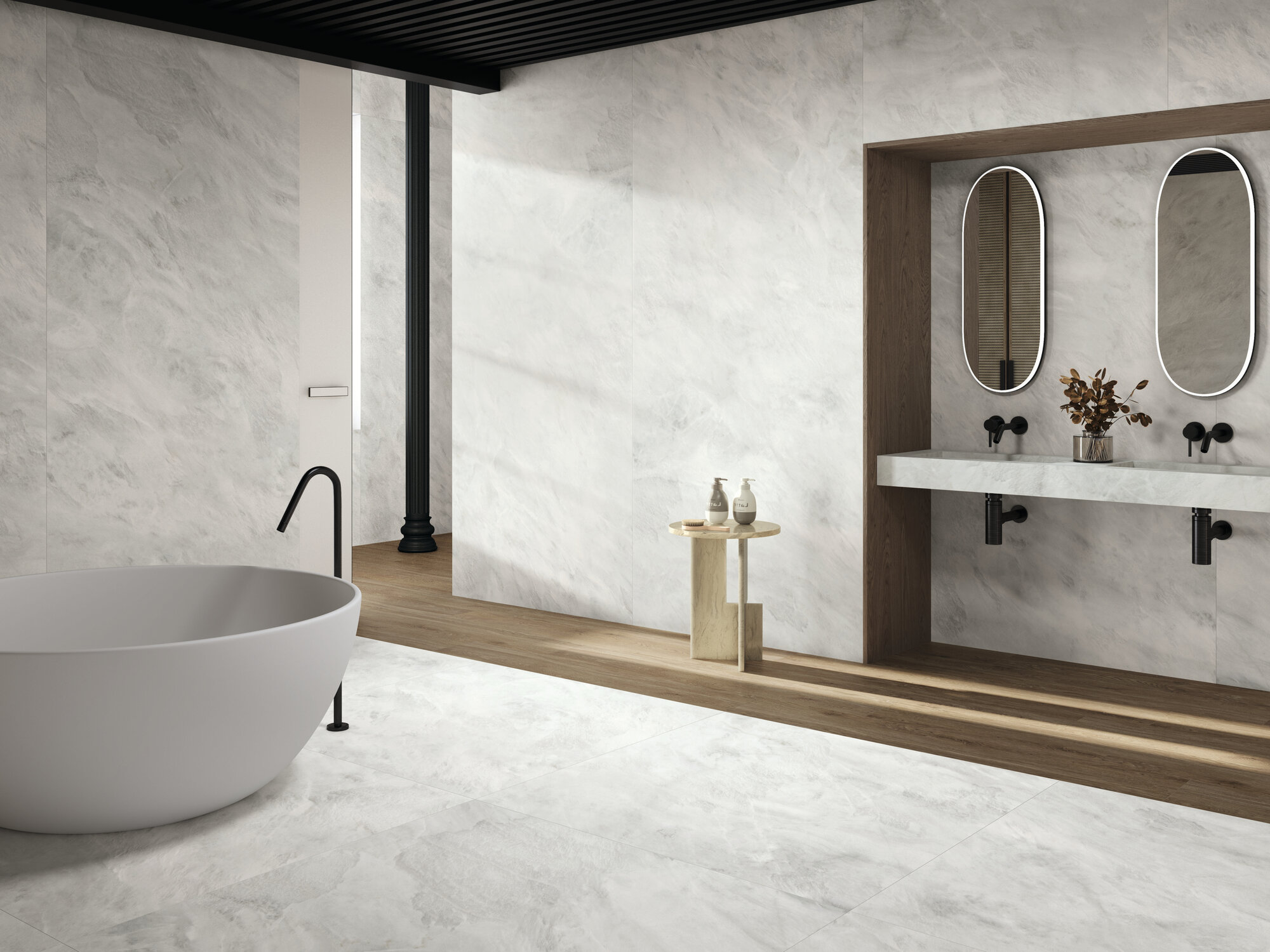
Grey marble is the introvert of the family, and that is exactly its strength. It grounds a room without stealing it, hides daily marks better than white, and pairs beautifully with steel, glass and pale wood.
The Greek-inspired veining of Alexandria moves naturally in this register, from pearl greys to deeper tones. And a practical note for planners: grey marble floor tiles are among the easiest keywords of the whole marble family to justify, because the surface stays presentable with minimal effort.
Both work on floors; the choice is about lifestyle and light. White marble flooring maximises brightness and makes smaller rooms feel bigger, and in a living room it delivers that hotel-lobby elegance the searches keep asking for. Grey is more forgiving with traffic, pets and footprints, which is why it wins in hallways and busy family homes.
In either colour, large formats such as 60×120 and 120×120 let the veining flow with barely any grout lines, and a matt finish keeps the surface contemporary while polished maximises the mirror effect.
The bathroom is where this palette feels most at home. A white marble bathroom, floor to ceiling, remains the reference image of luxury; full-height porcelain pieces now do the job of shower panels with real grout-free continuity in the wet zone.
Grey marble bathroom tiles offer the calmer version: paired with warm wood and white sanitaryware, the room reads as a spa rather than a showroom.
The two tones are natural partners because most white marbles already carry grey in their veins. Three combinations that always land:
The natural slab is, and it also needs sealing and careful maintenance. Carrara-look porcelain delivers the same graphics at a fraction of the price, with none of the upkeep, which is why most current projects specify it.
Natural white marble does: wine, coffee and cosmetics are its enemies. In porcelain the surface is non-porous, so white floors stay white with ordinary cleaning.
Match the undertone to the light: north-facing rooms favour warm greys to avoid coldness; sun-filled rooms can take cooler, bluer greys. Bring a sample home before deciding.
White for light, grey for calm, and porcelain so neither asks anything in return. Start with the veining that moves you in Arabescato, Michelangelo or Alexandria, and if you want the full picture of colours and formats, our guide to marble tiles covers the whole family.




 Return